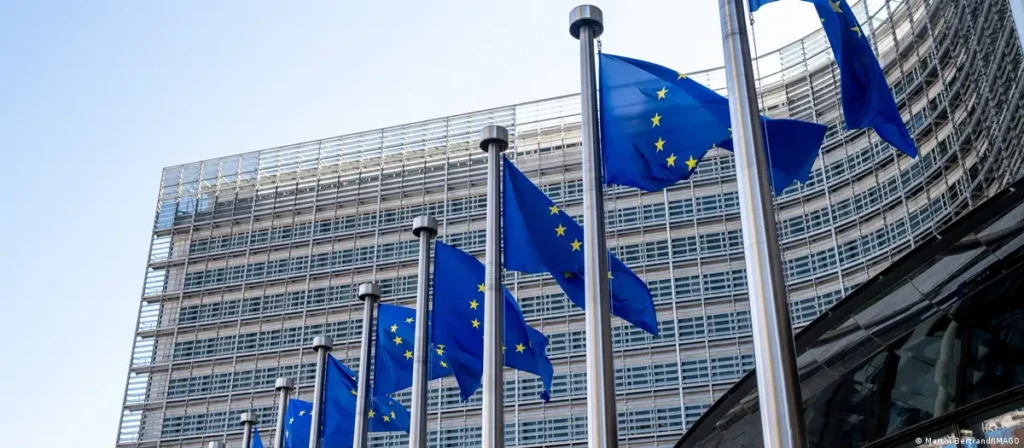
The adoption of the Multiannual Financial Framework (MFF), the European Union’s long-term spending plan, is one of the most sensitive political issues in the bloc. The negotiations are currently entering a critical phase. The question is not only how much the EU will cost its member states from 2028 to 2035, but also what they will receive in return.
For the EU institutions, it is also a matter of external autonomy: “In a time of geopolitical instability, the budget will allow Europe to shape its own destiny, in line with its vision and ideals,” said European Commission President Ursula von der Leyen last July when she unveiled her proposals for the long-term budget.
On Tuesday, the European Parliament voted to increase the EU budget. But ultimately, it is the bloc’s 27 member states who will have the final say. Last week, EU leaders met at an informal summit in Cyprus and there were already signs of disagreement.
While the European Commission had proposed a budget of €1.76 trillion ($2.05 trillion) (adjusted for inflation), the European Parliament opted to go even further.
EU member states divided over budget
Member states are divided on this issue. For example, Germany and the Netherlands have spoken out against the Commission’s proposals.
“At a time when nearly all member states are undertaking the most rigorous fiscal consolidation efforts at home, a massive increase in the EU budget, as proposed by the Commission, does not fit the picture,” said German Chancellor Friedrich Merz in Cyprus.
Other member states, however, particularly net recipients that receive more funds than they contribute, believe that the budget is too low given the tasks at hand, Janis Emmanouilidis from the Brussels-based think tank European Policy Center told DW. According to a study by the Cologne-based German Economic Institute, net recipients in 2024 included Greece, Poland, Romania, Spain and Hungary.
Emmanouilidis also said that at the same time the largest net contributors to the EU, such as Germany, France, Italy, the Netherlands and Sweden, also had an interest in keeping their contributions as low as possible.